Driver resources
Why EV charging uses more kWh than your battery size.
If you're new to driving electric, charging can feel a little unfamiliar at first. That's completely normal. The good news is that once you understand a few simple things, it quickly starts to make sense - and in many ways, it's actually easier than stopping at a petrol station.
How much energy your EV actually uses.
Every EV battery has a stated capacity - for example, 60kWh, 77kWh or 100kWh. But the amount of electricity drawn from a charger will always be a little higher than that number.
Most EVs need around 10-15% more energy than their battery size to charge from empty to full. A 100kWh battery, for example, might draw approximately 110-115kWh from the charger.
This is completely normal. It's simply how battery technology works. That extra energy isn't wasted - it's part of how your EV safely and efficiently manages power.
What is charging efficiency?
Whenever electricity moves, a small amount of energy is naturally lost as heat. This happens across the National Grid, through home wiring, and during EV charging too.
This is called charging efficiency, and it varies depending on:
- the type of charger you're using
- your vehicle's onboard systems
- the power level being delivered
Charging efficiency is the main reason an EV draws slightly more energy than its battery capacity suggests.
Why the kWh drawn doesn't match the percentage gained.
Even while your EV charges, it's quietly running important systems in the background. Think of it like charging your phone while you're using it - it's still charging, but other things are drawing power at the same time.
Your EV may be running:
- battery temperature control
- onboard electronics
- remote connectivity
- pre-conditioning features
- general software functions
These all help protect the battery and keep charging consistent. But they do mean the total kWh from the charger won't match your battery percentage exactly. That's nothing to worry about - it's all working as it should.
Home charging vs public rapid charging.
Not all chargers are equally efficient, and it's worth understanding why.
Home chargers and slower public charge points use AC (alternating current). Your EV needs to convert that into DC (direct current) before it can store it in the battery, because that's what EV batteries use. That conversion process generates a little heat - and that's where some energy loss happens.
Rapid and ultra-rapid chargers, like those on the Osprey network, deliver DC power directly to your car. That means:
- No conversion needed inside your vehicle
- Less heat generated in the process
- More power going straight into your battery
- Faster, more consistent charging overall
It's one of the reasons rapid charging is so much quicker - and often more efficient too.
What else affects charging efficiency?
A few practical factors influence how efficiently energy flows from charger to car:
- Cable length - Longer cables have slightly more resistance, which creates a small amount of heat loss. Charging networks balance cable length with convenience to keep things running well.
- Cable thickness - Higher-powered charging needs thicker cables to carry more current safely. These deliver energy quickly while keeping resistance, and energy loss, low.
- Temperature management - Your EV actively warms or cools its battery to the optimal range during charging. This uses a small amount of energy, but it protects your battery and helps it charge more efficiently in the long run.
Want to understand more about what affects your charging speed? Read our article on charging speed factors.
What you're actually paying for.
On the Osprey network, you only ever pay for the electricity delivered from the charger, measured in kWh.
That figure includes any energy used by your car's systems during charging, as well as any conversion losses. It reflects the actual electricity provided to your vehicle.
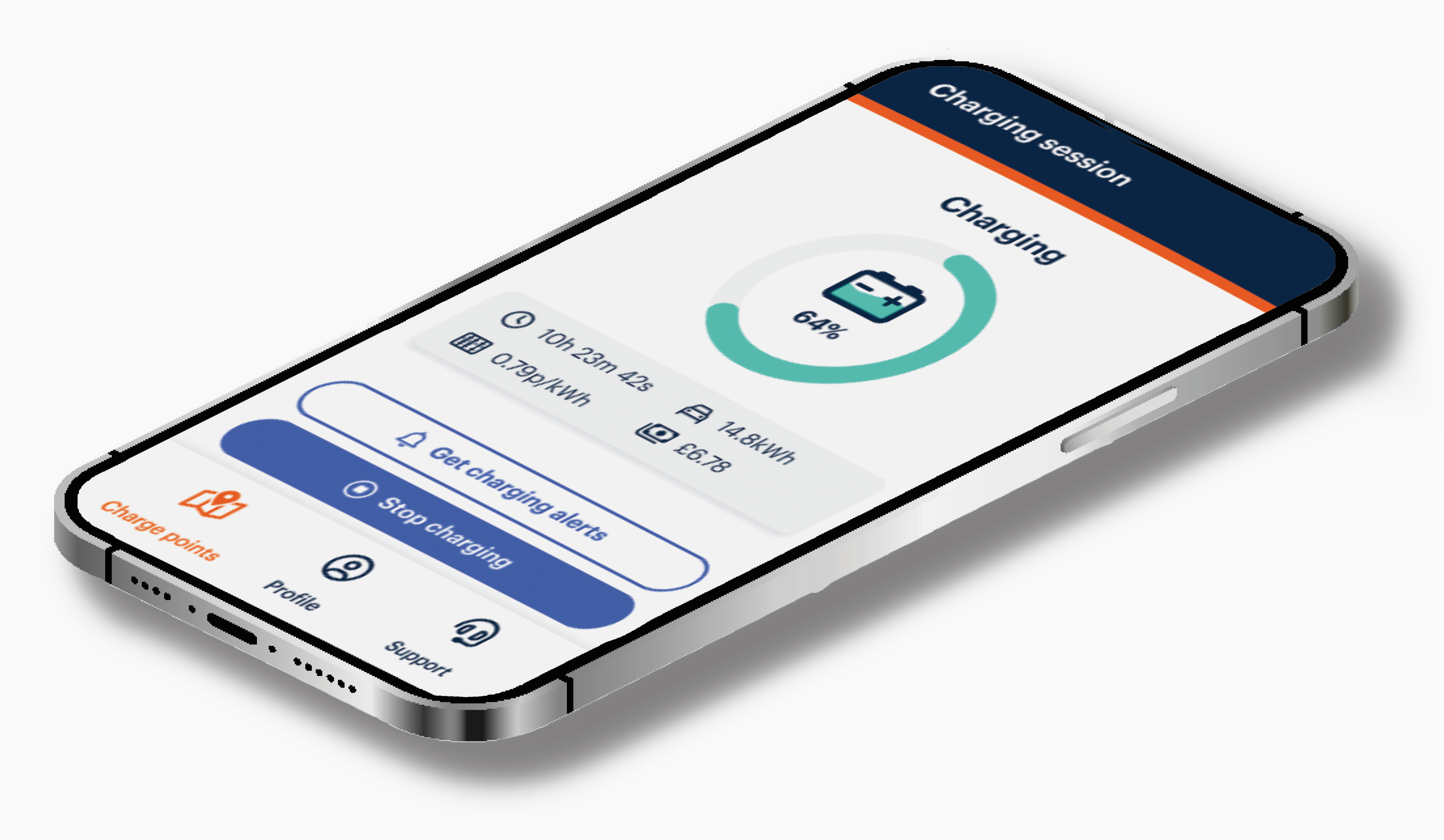
So while the kWh on your receipt won't directly match the rise in your battery percentage, it's an accurate record of what you received - and what you're paying for.
EVs with larger batteries will naturally cost more to charge to 100%. That's true whether you're at home, at work, or using a public rapid charger. But most drivers rarely need to charge to 100% anyway. A quick top-up is usually all it takes - and rapid chargers are built exactly for that.
FAQs
All EVs need a little extra energy beyond their stated battery capacity during charging. Typically around 10-15% more. This accounts for energy lost as heat during the charging process, as well as power used by your car's systems while it charges. It's completely normal.
Not at all. Most EV drivers find a regular top-up is plenty for daily driving. In fact, keeping your battery between 20-80% is generally better for long-term battery health.
Yes, generally. Rapid chargers deliver DC power directly to your battery, avoiding the conversion process that home AC chargers require. That means less energy is lost as heat, and more goes straight into your car.
Your battery percentage and the kWh recorded at the charger measure slightly different things. The receipt shows electricity delivered from the charger; your battery percentage reflects what's stored after accounting for conversion losses and energy used by onboard systems during charging. Both figures are accurate - they're just measuring different parts of the same process.
You pay for the electricity delivered from the charger, measured in kWh. This includes any energy used by your car's systems during the session and any conversion losses. It's a transparent, straightforward measure of what your vehicle received.
Driver resources.
Check out the latest driver guides from Osprey.