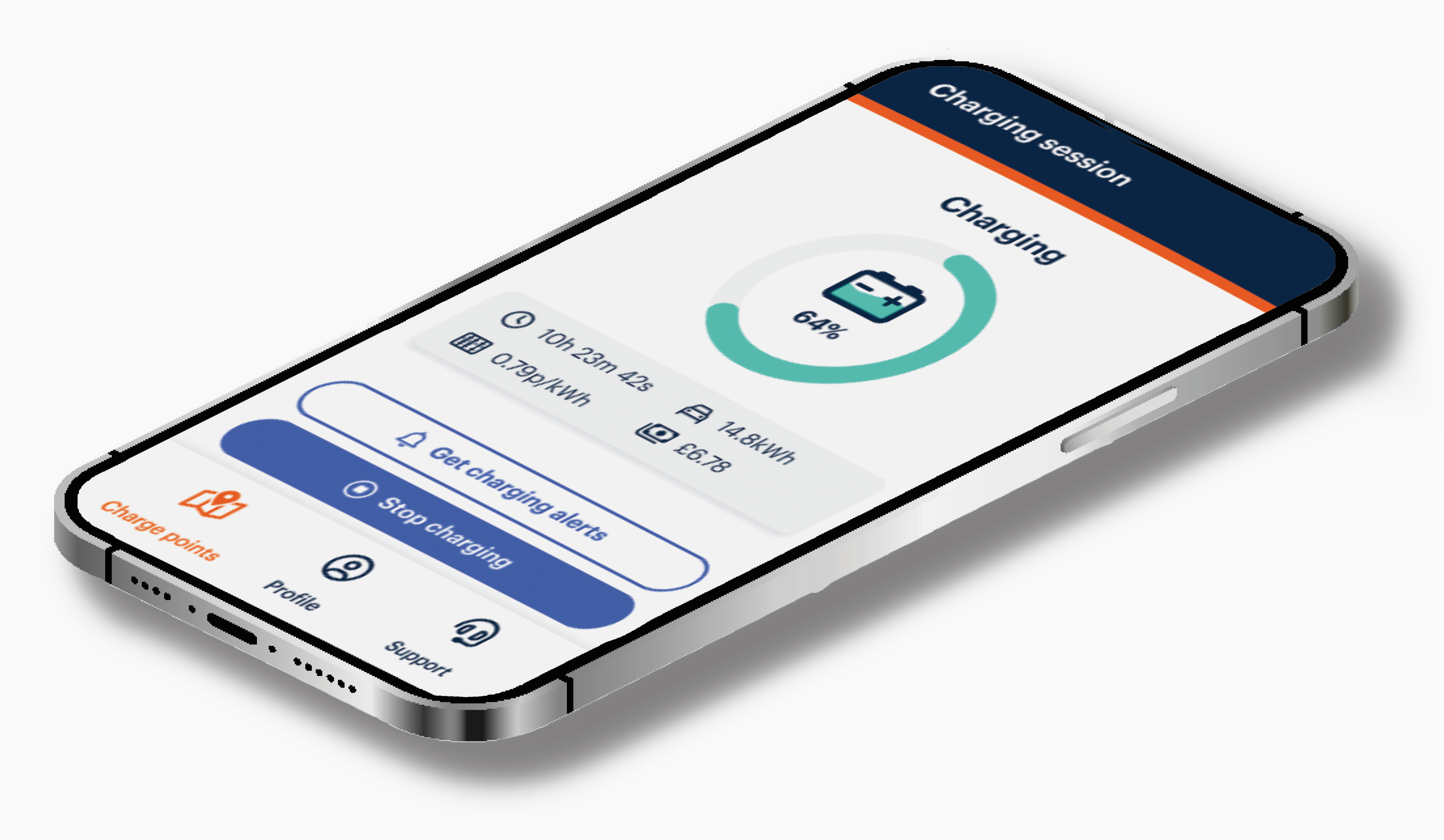
Ensuring safe and convenient charging.
Site evaluation.
With the surge in uptake of electric vehicles (EVs), demand for dedicated, high-quality charging stations is at a new high.
At Osprey, we developed a proprietary site-evaluation model to assess potential charging locations against a host of criteria, making convenience and comfort paramount across our network.
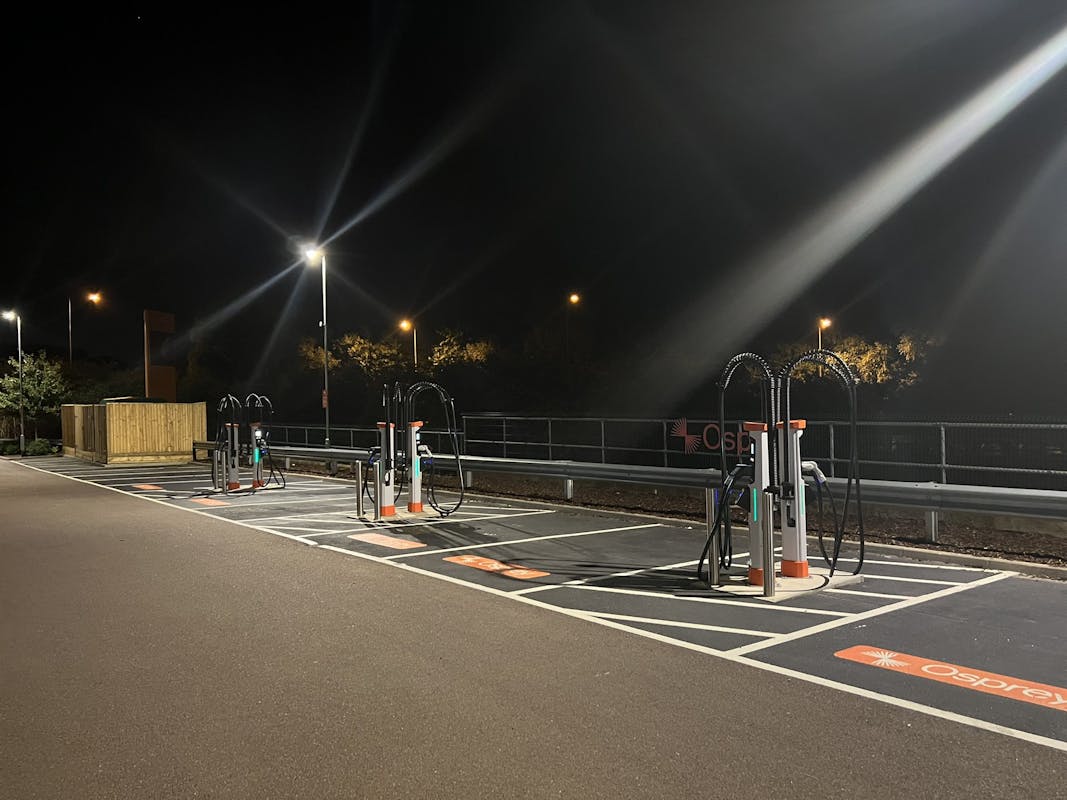
These criteria help ensure the charging areas we create are busy and therefore safer for drivers too; we look at the proximity of potential sites to busy roads, residential areas, shopping areas and amenities. You can therefore find our chargers at pub restaurants, drive-thru coffee, busy town car parks and within busy retail areas, especially on major routes.
We also work with landlords to place our chargers as close as possible to the busiest areas, as well as installing multiple charge points to create a well-used, visible charging space.
Since it was introduced, the quantitative and human-input evaluation model has crunched thousands of locations! Not all sites pass the model’s high standards, and this careful consideration of location before we build is essential to creating our high-quality network of rapid charging hubs that brings comfort and confidence whether you're charging day or night.
What happens after a site passes the evaluation process?
We see many fantastic locations successfully pass our evaluation process, as well as landlords keen to host charge points. However, there are further hurdles to overcome before we can start constructing a site.
The first step is submitting an application for a grid connection. This process typically takes a few months and involves considering the unique power constraints and amenities at the site to determine an appropriate dwell time and therefore size of installation.
Once the grid connection is secured, the next phase is to create site designs and renders. These plans are then submitted for approval to the Distribution Network Operator (DNO) and the landlord.
For all sites, we need to agree a form of lease with our landlords, granting us the right to build and operate charge points on their land. If the site is going to host a large hub of chargers, a substation is required, and this can mean negotiating a separate lease for this electrical infrastructure, as it is adopted and maintained by the DNO. This process is currently complex, differs across regions, and can take many months, depending on the landowners involved and the regional DNO.
In addition, other legal processes such as negotiating wayleaves (if the construction work crosses any third-party land) and obtaining planning permission (required for some elements of charging sites in some regions) are common.
Because of these complexities, some sites are not able to progress to completion, or suffer long delays, due to factors outside of our control.
At every stage of the process, we work to ensure that the placement of our charging network is up to the highest standards, providing multiple charge points in the most convenient places, providing the best possible experience for all drivers.
More insights.
Check out the latest insights from Osprey Charging.