Driver resources
Does fast charging affect battery life?
The truth about rapid charging your EV.
If you've just switched to an EV, chances are someone has warned you about rapid charging damaging your battery. Maybe it was a friend, a forum post, or a well-meaning comment at a charging point. And it's a fair concern, EV batteries are expensive, and when you're new to electric driving, the last thing you want to do is accidentally shorten your car's life.
But here's the truth: the reality is more nuanced, and far less scary, than the headlines suggest.
In this guide, we'll cut through the noise, look at what the evidence actually says, and give you some simple habits that will keep your battery in
How does EV battery degradation actually happen?
All modern EVs use lithium-ion batteries. This is the same fundamental technology found in your phone and laptop. Over time, every lithium-ion battery loses a small amount of its capacity. This is completely normal and unavoidable, but the rate at which it happens depends on how you use and charge your vehicle.
The main factors that accelerate battery degradation are:
Heat:
High temperatures are the single biggest enemy of battery longevity
Deep cycling:
Regularly draining the battery completely flat and charging to 100%
Age:
Time takes its toll, regardless of usage
The good news? Modern EV batteries are engineered to last. Most manufacturers warrant their batteries for eight years or around 100,000 miles, and real-world data consistently shows that the majority of EVs retain well over 80% of their original battery capacity after several years of use. Fleet data from telematics company Geotab found that average annual degradation across thousands of EVs is less than 2% per year – often significantly less.
So does rapid charging cause damage?
Here's the honest answer: using rapid charging occasionally is perfectly fine. Using it exclusively, every single day, over many years, could contribute to slightly faster degradation in some vehicles. But the difference is far smaller than many people assume.
The reason rapid charging gets flagged at all comes down to heat. When electricity moves into a battery very quickly, it generates more heat than a slower charge would. Sustained heat is what causes chemical stress inside the battery cells.
However (this is the crucial part) virtually every modern EV has a built-in Battery Thermal Management System (BTMS) specifically designed to manage this. Your car actively monitors the battery temperature during a rapid charge and will slow the charging rate if things get too warm. You don't have to do anything. The car handles it.
Real-world studies support this reassurance. Recurrent Auto, which tracks battery health across tens of thousands of EVs in the US, found that regular use of DC fast charging had minimal measurable impact on battery health for most modern vehicles. Earlier-generation EVs – notably older Nissan Leafs without active thermal management – did show more degradation from frequent rapid charging, but this has been addressed in newer models across the industry.
The takeaway: your car is smarter than the rumours suggest. Use rapid charging when you want it – that's exactly what it's there for.
The 20–80% rule.
If there's one habit worth building as a new EV driver, it's this: try to keep your battery between 20% and 80% for everyday charging.
This is down to something called the charging curve. EV batteries charge fastest in the middle range of their capacity – roughly between 20% and 80% State of Charge (SoC). Below 20% and above 80%, the charging rate naturally slows to protect the battery. Regularly pushing to 100% or running down to near-empty puts the cells under more chemical stress over time.
Sound familiar? It should – your phone battery works in exactly the same way. Charging your phone to 100% every night and running it flat every day degrades it faster than if you kept it topped up in the middle range. The same chemistry applies to your EV, just scaled up considerably. It's not a new quirk of electric cars, it's a fundamental property of lithium-ion batteries that engineers have known about for decades.
The practical upside? At ultra-rapid chargers like those on the Osprey network, you can charge from around 20% to 80% in less than 30 minutes. That's the sweet spot – fast, battery-friendly, and gets you back on the road quickly. You're not missing out by stopping at 80%; you're actually making the smartest use of your charging session.
This guidance applies whether you're using a rapid public charger or a slower home charger overnight. Many EVs let you set a charge limit directly in the car's settings or app and it's worth taking five minutes to configure this if you haven't already.
Tips to keep your EV batter healthy long term.
These habits are simple and, once they become routine, you'll barely think about them:
- Don't charge to 100% regularly. Save full charges for long trips where you genuinely need the range. For everyday use, 80% is the sweet spot.
- Avoid consistently dropping below 10–15%. Running the battery very flat regularly isn't great for long-term health.
- Park in the shade where possible, especially in summer. Heat (not charging speed) is the real enemy of battery longevity.
- Use scheduled charging if your car supports it. Many EVs let you set a time for charging to begin, so you can take advantage of cheaper overnight electricity rates and avoid charging during the hottest part of the day.
Follow these straightforward habits and your battery should comfortably outlast your ownership of the vehicle.
The bottom line.
Rapid charging is not the battery villain it's sometimes made out to be. Modern EVs are built with sophisticated systems that actively protect your battery during every charging session. Used sensibly as part of a varied charging routine, rapid charging is a safe, convenient, and genuinely impressive bit of technology.
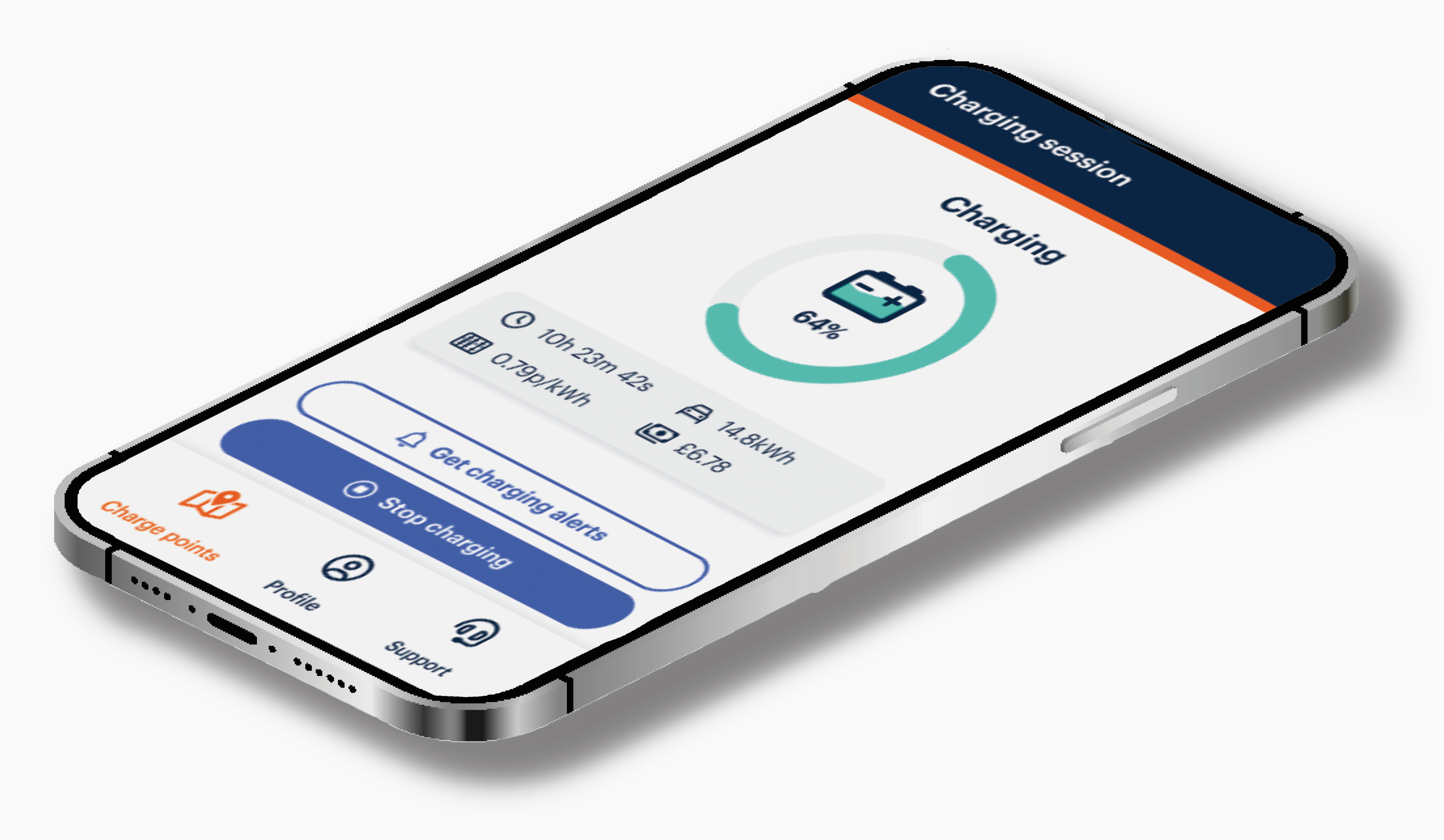
The Osprey network is designed for exactly this kind of everyday rapid charging – reliable, ultra-rapid chargers that get you from 20% to 80% in around 30 minutes, so you can get where you're going without worry. And when you charge with Osprey’s app, you can monitor and stop your charge remotely, so you don’t need to worry about charging over 80%.
Frequently Asked Questions
Occasional rapid charging does not meaningfully damage modern EV batteries. All current EVs include thermal management systems that regulate charging speed and temperature automatically. Using rapid charging as your only method every day over many years may accelerate degradation slightly, but for most drivers the impact is minimal.
There's no strict limit. Rapid charging is ideal for longer journeys or when you need a quick top-up. For everyday use, home charging, or on-street slow charging overnight is the most battery-friendly approach. A healthy balance is recommended.
Keep your battery between 20% and 80% for everyday driving. Avoid regularly charging to 100% or running the battery very flat. Use scheduled charging at home where possible, and park in shade to reduce heat exposure.
Charging to 100% occasionally for a long trip, for example, is fine. Doing it every day as a routine is not recommended for long-term battery health. Most manufacturers and charging experts suggest 80% as the ideal daily charge limit.
Yes, heat is one of the primary causes of accelerated battery degradation. Parking in shade during hot weather, avoiding charging in very high ambient temperatures where possible, and allowing the battery to cool after a long drive before charging can all help. Cold temperatures also temporarily reduce range but are less damaging to long-term health than sustained heat.
Most EV manufacturers warrant their batteries for eight years or around 100,000 miles. Real-world data suggests average degradation of less than 2% per year, meaning most batteries retain well over 80% of their original capacity after a decade of use. With good charging habits, many batteries will outlast the car itself.
Sources
1. Geotab — EV Battery Health Study (2025/2026) https://www.geotab.com/blog/ev-battery-health/
https://www.geotab.com/press-release/ev-battery-health-degradation-fast-charging-study/
2. Recurrent Auto — Impact of Fast Charging on Battery Health https://www.recurrentauto.com/research/impacts-of-fast-charging
3. Nissan Leaf Battery Survey (Plug In America / EV Battery Surveys) https://pluginamerica.org/nissan-leaf-battery-study-and-new-battery-capacity-warranty/
4. Zap-Map — Annual EV Charging Survey 2024 https://www.zap-map.com/ev-stats/ev-charging-survey
https://www.zap-map.com/news/annual-survey-key-findings-2024
More driver resources?
Check out the latest driver guides from Osprey Charging.